

{SECTION_MENU}
-
Climate Action
Whitegrove Climate Action Plan 2025-26
This year we are focussing and prioritising one aspect of climate care and sustainability- Biodiversity.
There will also be ongoing actions taken to support, waste management, pollution/littering, energy use, water use, global citizenship, transport, reusing, recycling.
Overview of the Biodiversity Project
The vision is “Connecting children to nature”. Our focus in this year’s Climate Action Plan is biodiversity. We plan to enhance the biodiversity of plants and animals within the school grounds. The Climate Ambassadors have already identified biodiversity hotspots and strategies to increase the biodiversity further. Each class in school will be given a biodiversity mission linked to their science curriculum and there will be ongoing work with the Climate Ambassadors and the school’s Nature Club. There will be constant monitoring and sharing of the species spotted on the school grounds and a surprise at the end of the year.
Expected Outcomes
- To increase the number of plant and animal species on the school grounds
- To enhance the school’s sustainability
- To connect children to nature
- Nature plays a crucial role in enhancing wellbeing and this project should enhance the whole school’s wellbeing
- To provide irresistible learning to the whole school
- To make science come alive for all children
- To enthuse children to look after and care about all living things on our planet, becoming global ambassadors
- To inspire children to think of science and conservation as a future career choice
Implementation
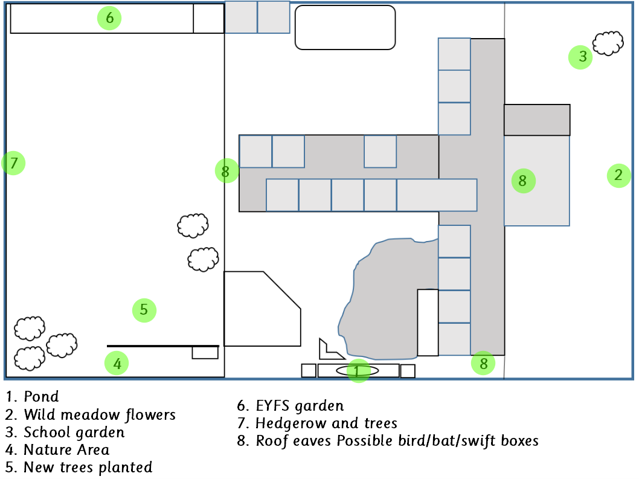
Step1) Completed- Identify biodiversity hotspots around the school grounds and strategies to increase biodiversity. Please see the school map below:
Step 2) January- launch the biodiversity project with the children at school starting with an assembly and introducing an interactive display board where children can start recording species, they have seen on the school grounds.
Step 3) March to end of term- give year groups missions linked to their science curriculum to increase biodiversity on the school grounds and monitor species.
Step 4) April through to July- Nature Club will constantly work on increasing biodiversity and monitor species. Parents will be invited for work parties too e.g. planting and creating habitats.
Step 5) Summer Term- Invite Councillor Mary Temperton (Title: Cabinet Member for Council Strategy and Climate Change) to see what the school have done to increase biodiversity.
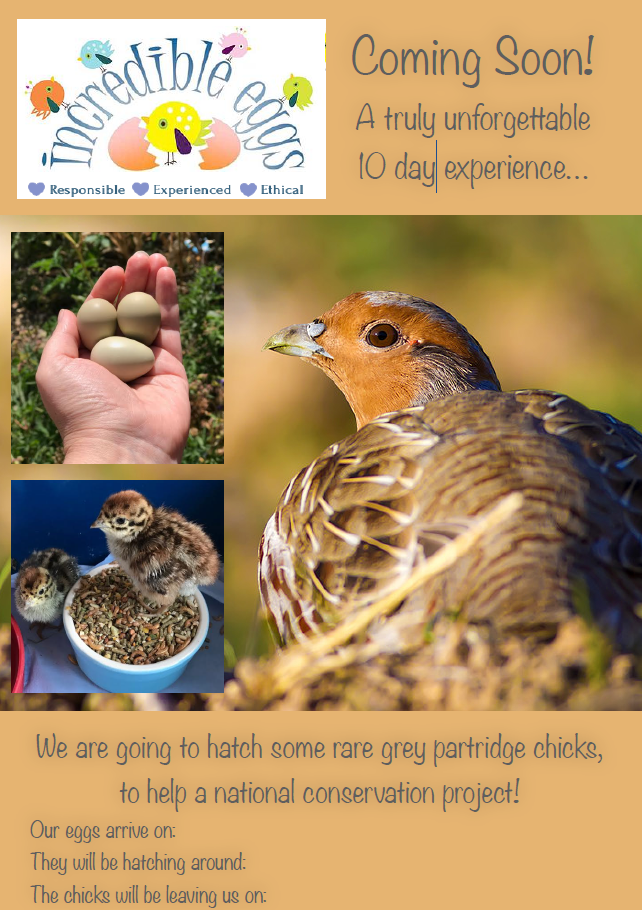
Step 6) June (2 weeks)- Whole school surprise of raising endangered Grey Partridge chicks and releasing them.
Ongoing Climate and Sustainability Actions in other areas
Waste management- fruit and vegetable waste from KS1 snacks will be composted. Food waste from the school kitchen and lunch hall are put into food bins with compostable bags.
Pollution/littering- Year 6 Climate Ambassadors will litter pick across the school grounds weekly.
Reusing- Year 6 Climate Ambassadors will sort and return any lost property weekly within the school. Any unclaimed/unnamed uniform will be donated or reused within the school.
Recycling- All classrooms and offices across the school have a dedicated paper recycling bin.
Energy use and water use- Children will make and design posters/labels to go around the school reminding adults and children to turn off switches/t when leaving rooms or when appliances/taps are not being used.
Transport- Walking to School Week starting 19/5/26 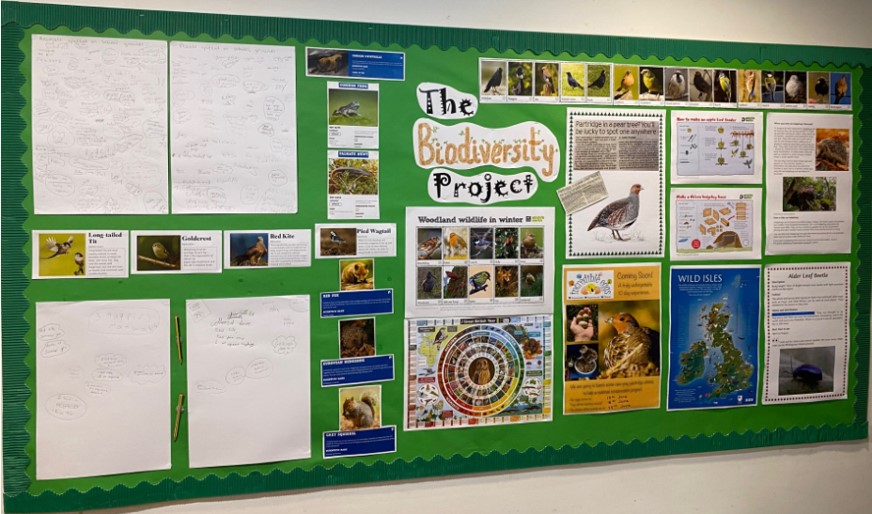
Biodiversity Project Board
Evaluation 16th June 2026
Step 1) Completed- by Mr Edwards and Eco Warriors. Staff and children are aware of the biodiversity hotspots within the school grounds.
Step 2) Completed- by Mr Edwards. The children were very enthusiastic about the Biodiversity Project. Children are constantly updating the Biodiversity Board with wildlife they have spotted on the school grounds and are reading the information on the board. I (Mr Edwards) am always being stopped by children in corridors and the playground with them giving me updates on what they have seen or questions about animals.
Step 3) Completed- by class teachers. All year groups have been monitoring the biodiversity on the school grounds and have been linking their science curriculum to wildlife on the school grounds/local area where possible.
Step 4) Started and ongoing through the Summer Term- Nature Club have been working on the pond and monitoring the species found in there. They have been monitoring bird species on the school grounds.
Step 5) Has not been possible- Changes of staff within the council.
Step 6) Completed- by Mr Edwards. The partridges are currently at school (as eggs). They will be hatching in a day or 2. There was a launch assembly where the partridge conservation project was explained to the children. The children will be following the partridges’ development and progress closely. The children are very excited!